
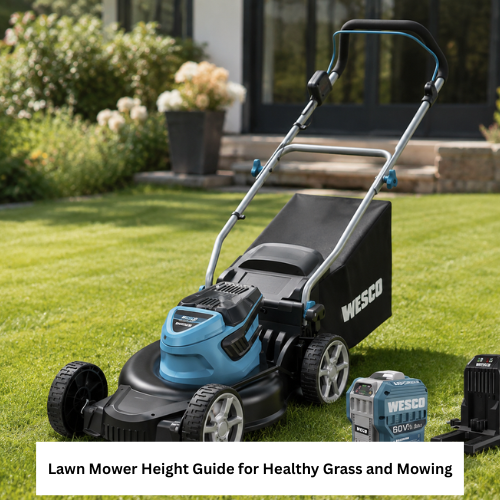
The correct lawn mower height depends on the grass type, season, weather, shade, soil condition, and how much growth has occurred since the previous cut. Cutting every lawn at the lowest deck setting can weaken the grass and expose the soil.
Buy Push Lawn Mower readers should identify the grass variety and check local lawn care guidance before selecting a target height. Mower adjustment markings may represent lever positions rather than exact cutting measurements, so verify the manual.
How to Set Lawn Mower Height Correctly
A useful grass cutting height protects enough leaf surface for healthy growth while keeping the lawn manageable. Avoid removing a large portion of the blade in one mowing.
| Lawn condition | General setting approach | Reason | What to check |
| Normal active growth | Suitable range for the grass type | Supports regular maintenance | Local grass guidance |
| Hot or dry weather | Higher end of the suitable range | Leaves more blade surface | Drought stress and watering rules |
| Shaded lawn | Often slightly higher | Supports limited light conditions | Grass variety and density |
| Overgrown grass | Reduce height gradually | Avoids excessive removal | Clippings and blade load |
| Final seasonal mowing | Follow regional guidance | Needs vary by climate | Frost timing and grass type |
The brushless push mower height model can be reviewed by buyers comparing deck settings and adjustment design. Verify the actual cutting range and whether one lever controls all wheels.
The cordless mower adjustment model provides another example for comparing deck positions, wheel setup, battery contents, and cutting width.
A four blade push reel mower may use a different adjustment method than powered rotary mowers. Confirm the available height range and how both sides remain level.
The brushless push lawn mower cutting model compared for its adjustment system and grass handling options. Verify the included bag, mulch plug, discharge parts, and current specifications.
The Worx six position mower listing offers an external example for reviewing adjustment positions, package contents, mower weight, and current seller information.
Measuring the Actual Cutting Height
Move the mower to a flat hard surface and disable it according to the manual. Set every wheel or axle to the same position.
Do not measure near a blade until the mower is fully disabled and cannot start. The safer method is to use the manufacturer chart or measure the grass after a short test strip.
Check the lawn mower height after changing wheels, blades, or deck components. Worn wheels, incorrect blade installation, or uneven axle settings can change the result.
Seasonal and Weekly Adjustments
Summer mowing height may need to remain toward the higher end of the suitable range during heat or drought. Taller grass can shade the soil, but the correct setting still depends on the grass variety.
During fast spring growth, mow often enough to avoid removing too much at once. If the lawn becomes overgrown, raise the deck and reduce it gradually across later mowings.
A lawn mower height setting that works in an open sunny area may not suit shaded or stressed sections. Use the healthiest practical setting rather than chasing the shortest appearance.
Troubleshooting Uneven Cutting
If one side cuts lower, confirm that all wheel levers match and that the deck is not damage. Inspect tires for wear and check whether debris is holding part of the deck up.
Scalped patches may result from a low setting, uneven ground, sharp turns, or wheels dropping into holes. Raise the deck and repair deep ruts where possible.
Torn or pale grass tips often suggest a dull or damaged blade. Disable the mower before blade inspection and follow the manual for sharpening, balancing, or replacement.
Adjustment and Maintenance Safety
Change push mower settings only with the engine stopped, power disconnected, safety key removed, or spark plug disabled as directed.
Clean the deck after the mower cools and dry it before storage. Check levers, brackets, wheels, axles, blade fasteners, and guards for looseness or damage.
Height Adjustment Checklist
Before setting lawn mower height check the following points.
- Identify the grass type and suitable regional range
- Confirm every wheel or axle uses matching settings
- Check deck lever compatibility and clear markings
- Disable the mower before adjustment or inspection
- Inspect wheels blade brackets and deck construction
- Test the setting on a small area
- Review cleaning sharpening and storage needs
- Check warranty terms before changing components
- Review the return policy for replacement parts
- Confirm compatible blades wheels and adjustment levers
- Check delivery contents and manufacturer support
- Verify before buying when the cutting range is unclear
Conclusion
The best lawn mower height supports healthy grass rather than producing the shortest possible cut. Match the setting to the grass type, season, weather, shade, growth rate, and mower adjustment system.
FAQ
Should Grass Be Cut at the Lowest Mower Setting?
Usually not. An excessively low cut can scalp uneven areas and stress the grass.
Should Mowing Height Change in Summer?
It may need to remain higher during heat or drought, depending on the grass type and local guidance.
Why Does One Side of the Mower Cut Lower?
The wheel settings may not match, or a wheel, axle, blade, or deck component may be worn or damaged.
How Should Overgrown Grass Be Cut?
Raise the deck and reduce the height gradually over multiple mowing sessions.
Can Height Be Adjusted While the Mower Is Running? No. Stop and disable the mower according to the manual before making adjustments.
