
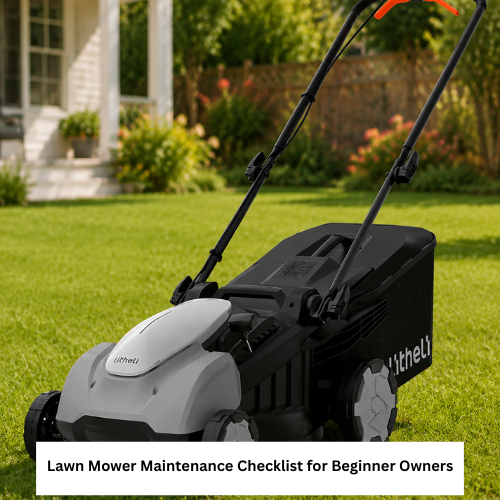
A simple lawn mower maintenance routine helps beginners catch loose parts, clogged airflow, dull blades, damaged cords, and fuel problems before they become larger repairs. The correct tasks depend on whether the mower is power by gas, a battery, a cord, or manual reel movement.
Always read the mower manual before removing covers, changing oil, sharpening a blade, or working near the cutting area. Product-specific service positions, fluids, fastener settings, and replacement parts should be verified before maintenance begins.
Beginner Lawn Mower Maintenance Schedule
Regular checks are easier when they are divided by timing instead of being completed only after a problem appears.
| Maintenance timing | Main tasks | What to verify |
| Before every mow | Check guards, blade area, wheels, handle, cord, battery, or fuel | No loose, damaged, or missing parts |
| After every mow | Remove dry grass, empty catcher, inspect deck, wipe surfaces | Machine is powered off and cool |
| Every few uses | Inspect blade condition, air openings, cables, and fasteners | Follow the manual for access and adjustment |
| Seasonal | Check oil, spark plug, air filter, battery, charger, and blade | Exact intervals vary by model |
Good lawn mower maintenance should prevent unsafe operation, not simply improve appearance. Stop using the mower when a guard, handle, cable, switch, blade, fuel line, or electrical component is damage.
Blade Inspection and Sharpening
A dull blade can tear grass instead of cutting it cleanly. Signs include ragged grass tips, uneven cutting, increased vibration, and the need to pass over the same area repeatedly.
A compatible lawn mower hand sharpener can support routine blade care, but verify the blade design and tool instructions before use.
Rotary blades normally require removal and balancing after sharpening. Reel mowers use a reel and bed knife system that may require adjustment, backlapping, or specialized servicing.
Replace the blade when it is:
- Cracked
- Deeply chipped
- Bent
- Heavily corroded
- Worn around the mounting hole
- Too thin to sharpen safely
- Unable to balance after sharpening
Use the exact replacement blade specified for the mower. Similar blade length does not guarantee correct mounting, lift, thickness, or clearance.
Cordless and Electric Mower Care
Battery inspection
Check the battery housing, terminals, latch, and charge indicator. Do not use a battery that is cracked, swollen, leaking, overheating, or physically damaged.
Allow a hot battery to cool before charging. Charge it in the location and temperature range stated by the manufacturer.
Charger compatibility
A model specific replacement charger for MJ401C should only be used when the mower battery system and charger part number are confirmed as compatible.
Matching the plug shape is not enough. Voltage, battery chemistry, charging controls, and manufacturer compatibility must also match.
Cord inspection
For corded mowers, check the full extension cord before use. Replace cords with damaged insulation, loose plugs, bent blades, or signs of overheating.
Use only an outdoor-rated cord with the length and electrical rating required by the mower manual.
Cooling vents
Keep motor and battery cooling openings free of dry grass and dust. Do not insert sharp tools into vents.
Grass Catcher and Discharge Parts
Empty the grass catcher before it becomes overfilled. Excess weight can affect airflow, handling, and collection performance.
A lawn mower rear grass catcher bag should match the mower model, frame, opening, and attachment points before it is use.
Inspect bags and frames for:
- Tears
- Weak seams
- Broken hooks
- Bent frames
- Blocked mesh
- Damaged handles
- Loose mounting points
Do not use a bag with a large tear because debris may escape toward the operator.
Check side discharge chutes and mulching plugs for secure attachment. Never remove a guard while the blade is turning.
Wheels, Cables, and Handles
Check wheel fasteners and axle areas for looseness, grass buildup, and damage. Wheels should rotate without excessive wobble.
Self-propelled mowers may have drive belts, cables, gears, or wheel mechanisms that need model-specific adjustment. Do not overtighten a drive cable to compensate for a worn part.
Inspect folding handles before every use. Make sure locks are fully engage and no cable is pinched when the handle is folded or unfolded.
Lubricate only the points identified in the manual. Applying oil or grease to the wrong area may collect debris or reach a braking surface.
Storage and Weather Protection
Store the mower in a dry, ventilated location away from ignition sources and children’s access.
An outdoor waterproof lawn mower cover can reduce exposure during storage, but it must fit the mower and should only be installed after the machine is clean, dry, and cool.
Measure the mower with the handle in its storage position. A cover that is too tight may tear, while a cover that is too loose may trap debris or blow away.
Do not cover a warm gas engine. Trapped heat and fuel vapors can create a hazard.
For battery mowers, follow the battery manufacturer’s storage charge and temperature guidance. The battery may need store separately from the mower.
Common Maintenance Mistakes
Avoid these common errors:
- Cleaning while the mower is powered
- Reaching under the deck with bare hands
- Tilting a gas mower in the wrong direction
- Guessing the oil type or quantity
- Washing electrical components
- Bypassing safety controls
- Reusing a cracked blade
- Installing an unverified replacement part
- Covering a wet or hot mower
- Storing gasoline indoors
- Charging a damaged battery
- Ignoring unusual vibration
- Discarding the manual before recording part numbers
Buyers can review a waterproof lawn mower cover listing as an external comparison, then verify dimensions, material, closure design, seller details, and return terms.
Conclusion
Consistent lawn mower maintenance helps protect the cutting system, engine, battery, controls, wheels, and storage condition. Disconnect the power source before service, follow the manual, and replace unsafe parts instead of forcing them to work. Buy push lawn mower gives homeowners relevant mower parts and accessories to compare while keeping fit and compatibility checks central to every purchase.
FAQ
How often should I clean a push mower?
Remove grass and debris after each use once the mower is cool and fully disconnected from its power source.
How often should mower oil be changed?
Follow the engine manual. The interval can depend on the engine, operating hours, and mowing conditions.
Can I wash the underside of a mower?
Only use water when the manufacturer permits it. Keep water away from electrical parts, bearings, engines, and battery compartments.
When should a mower blade be replaced?
Replace it when it is cracked, bent, deeply damaged, heavily worn, or unable to balance after sharpening.
Should a battery stay in the mower during storage?
Follow the battery manual. Many systems require the battery remove and stored within a stated temperature and charge range.
