
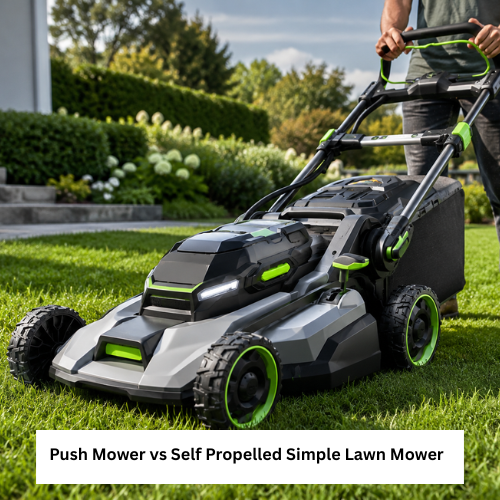
The push mower vs self propelled choice depends on your yard size, slope, physical effort, storage space, and mowing habits. A manual push mower may work well for flat smaller yards, while a self propelled mower can reduce effort on larger or sloped lawns.
Both options are walk-behind mower styles, but they feel different during use. The right choice should match your strength, yard layout, grass conditions, and long-term maintenance comfort.
Push Mower vs Self Propelled: Main Difference
When comparing push mower vs self propelled options, the biggest difference are movement support. A regular push mower depends mostly on your effort, while a self propelled mower helps move the machine forward.
This does not mean one option is always better. A lighter manual push mower may be enough for flat yards, while a heavier self propelled mower may be useful for slopes, thick grass, or longer mowing sessions.
Manual Push Mower Buying Tips
A manual push mower can be a good option for smaller, flatter lawns where the user wants simple mowing and less machine complexity. It may also appeal to buyers who want easy storage and fewer fuel or battery concerns.
Before buying, check cutting width, mower weight, wheel size, handle comfort, cutting height adjustment, and whether the mower suits your grass type.
Self Propelled Mower Buying Tips
A self propelled mower helps reduce pushing effort because the drive system moves the mower forward. It can be helpful for larger lawns, uneven yards, or users who want easier movement.
Before buying, check drive type, speed control, mower weight, storage size, maintenance needs, and replacement part availability. If these details are unclear, verify before buying.
| Feature | Push Mower | Self Propelled Mower | Buyer Tip |
| Effort | More user pushing | Less pushing effort | Choose based on strength and yard size |
| Best yard type | Flat, small, simple lawns | Larger, sloped, or uneven lawns | Match mower to terrain |
| Maintenance | Usually simpler | May need more drive-system care | Check parts and manual |
| Storage | Often lighter and compact | Can be heavier | Measure storage space |
| Control | Simple movement | Drive-assisted movement | Check speed control before buying |
| Cost consideration | Often more budget-friendly | Often higher depending on model | Verify value and features |
Mower for Flat Yard vs Mower for Hills
A mower for flat yard use should be easy to turn, simple to push, and light enough for regular use. A heavy mower may not be necessary if your lawn is small and even.
A mower for hills should be chosen carefully because slopes need better traction, stable handling, and safe control. Avoid mowing unsafe slopes and always follow the product manual.
Walk Behind Mower Comfort and Safety
A walk behind mower should fit your height, walking pace, and yard layout. Check handle position, wheel size, deck width, and whether the mower is easy to control around corners.
Always clear the yard before mowing. Wear closed-toe shoes, keep people and pets away, and stop the mower before clearing clogs or checking the blade area.
Maintenance and Replacement Parts
Push mowers may need blade sharpening, wheel checks, cleaning, and handle inspection. Self propelled models may also need drive belt, cable, wheel drive, or speed-control checks depending on the model.
If you plan to keep the mower for several seasons, check lawn mower parts and accessories before buying so you know whether replacement items are available.
You can also compare a self propelled mower example if you want to understand common drive-assisted mower styles before ordering.
Common Buying Mistakes
Do not buy a self propelled mower only because it sounds easier. If your yard is small and flat, a simpler push mower may be enough.
Do not buy a push mower if your yard has long slopes, thick grass, or areas that make pushing difficult. Comfort and safety should matter as much as price.
Troubleshooting Mower Choice Problems
If mowing feels too tiring, check mower weight, blade sharpness, grass height, and whether your yard needs a self propelled option. If the mower pulls unevenly, check wheel condition and height settings.
If a self propelled mower does not move correctly, stop using it and check the manual. The drive cable, belt, wheels, or speed control may need inspection.
Practical Buying Checklist
- Measure lawn size and mowing time.
- Check whether your yard is flat, sloped, or uneven.
- Compare push effort and self propelled drive support.
- Check mower weight and handle comfort.
- Verify cutting width and height adjustment.
- Review safety instructions and slope guidance.
- Check storage space and folding handle options.
- Review cleaning and maintenance requirements.
- Confirm replacement parts, blades, belts, and accessories.
- Check warranty, return policy, delivery, and support.
- Verify before buying if drive type or included parts are unclear.
Conclusion
The push mower vs self propelled decision should come down to yard size, slope, effort, comfort, and maintenance needs. Choose a push mower for simple flat lawns, consider a self propelled mower for harder mowing conditions, and verify product details before buying.
FAQ
What is the difference between a push mower and self propelled mower?
A push mower depends on user effort, while a self propelled mower helps move forward with a drive system.
Is a push mower good for a flat yard?
Yes, a push mower can work well for flat small yards if the mower is light and easy to control.
Is a self propelled mower better for hills?
It can help reduce effort on slopes, but buyers should still check safety guidance, traction, and product instructions.
Are self propelled mowers harder to maintain?
They may need more maintenance because of drive parts. Check the manual and replacement part availability before buying.
Which mower is better for beginners?
For small flat lawns, a push mower may be simpler. For larger or sloped yards, self propelled support may be easier.