
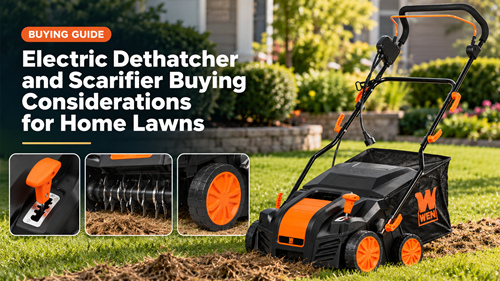
An Electric Dethatcher and Scarifier is useful only when the lawn actually needs thatch removal. It is not a substitute for normal mowing, and aggressive use on stressed or newly seeded turf can cause damage instead of improving the lawn.
Compare working width, tine or blade system, depth adjustment, motor rating, cord or battery requirements, collection method, replacement parts, and storage. Match the tool to lawn area and thatch condition rather than simply choosing the deepest available setting.
This guide keeps the purchase decision centered on lawn condition, recovery timing, and practical home use.
How To Evaluate Electric Dethatcher And Scarifier
Electric Dethatcher and Scarifier should be evaluated around the work it must do every week, not around one headline number. Measure the lawn, identify narrow access points and obstacles, note the grass condition, and decide how clippings, charging or fuel, cleaning, and storage will be handled before comparing models.
For an example of the electric dethatcher and scarifier features, use the linked product page to compare the feature set with the requirements of your own yard rather than treating the listing as a universal recommendation.
A broader electric dethatcher and scarifier buying guide, can help separate category-level decisions from product-specific details, especially when several mower types could serve the same residential lawn.
Electric Dethatcher And Scarifier Features That Matter In Real Use
Working Width
A wider working path covers open lawn faster, while a narrower machine may be easier around beds, trees, and small gates. Compare the full machine width as well as the active tine width. This is worth checking on the exact model because a small design difference can change handling, cut consistency, or the amount of work required between mowing sessions.
Depth Adjustment
Depth settings should let the operator start conservatively. The goal is controlled thatch removal, not digging deeply into soil or tearing healthy crowns. This is worth checking on the exact model because a small design difference can change handling, cut consistency, or the amount of work required between mowing sessions.
Tine And Scarifier Systems
Spring tines comb material from the surface, while scarifier blades can work more aggressively. Check which cartridge is included and whether replacements are sold for the exact model. This is worth checking on the exact model because a small design difference can change handling, cut consistency, or the amount of work required between mowing sessions.
When the shortlist is down to a few models, review the exact electric dethatcher and scarifier specifications. Dimensions, capacity, adjustment ranges, included accessories, and power-system details should come from the current manufacturer or product record.
Specifications And Yard Fit
Collection And Cleanup
A small collection bag may fill quickly because dry thatch is bulky. Some users prefer to rake afterward rather than stopping constantly to empty a bag. Check how that feature interacts with the rest of the mower instead of assuming that a larger, faster, or heavier specification is automatically better.
Power And Extension Planning
Corded tools need a correctly rated outdoor extension cord and outlet arrangement. Battery tools need enough capacity for the lawn area and recovery time between passes. Check how that feature interacts with the rest of the mower instead of assuming that a larger, faster, or heavier specification is automatically better.
| Yard Situation | Priority | Why It Matters |
|---|---|---|
| Thin surface debris | Light tine pass | Start shallow |
| Dense springy layer | Scarifier may be appropriate | Confirm turf condition first |
| Small fenced lawn | Narrow working width | Better maneuvering |
| Large open lawn | Wider working width | Reduce passes |
| Corded model | Outlet and cord route | Prevent cord crossing work path |
Setup, Maintenance, And Ownership
Build ownership cost into the decision by checking electric dethatcher and scarifier maintenance. Routine cleaning, blade or line care, battery or engine service, wheel inspection, and seasonal storage all affect how reliably the equipment performs after the first month.
Before the first mowing session, follow a safe electric dethatcher and scarifier setup. Read the owner’s manual, inspect the work area, set the machine on stable ground, and keep hands and feet away from the cutting system whenever power could be available.
Pre-Mowing Ownership Checklist
- Measure thatch thickness in several areas
- Identify the grass type and recovery season
- Choose a shallow first setting
- Remove stones, toys, and irrigation markers
- Plan cord or battery management
- Make test passes before full coverage
- Clean debris and inspect tines after use
Keep the owner’s manual, model number, battery or engine details, and replacement-part information together. That small record makes future maintenance and parts ordering much easier and reduces the risk of using an incompatible blade, battery, line, oil, or accessory.
A Practical Comparison Checklist
For homeowners deciding whether this format genuinely fits the property, use electric dethatcher and scarifier for home lawns. Compare the recommendation with lawn area, access, slopes, obstacles, grass type, and the time available for each mowing session.
A useful final cross-check is a electric dethatcher and scarifier comparison. Compare only the specifications that affect your own yard, then eliminate models that miss a non-negotiable requirement such as access width, cutting height, runtime, storage, or safe operating range.
After narrowing the list, compare total ownership rather than purchase price alone. Replacement blades or line, batteries, chargers, fuel, oil, filters, collection bags, extension cords, and storage accessories can change long-term cost and convenience.
Common Buying Mistakes
- Dethatching a lawn without confirming a thatch problem
- Using the deepest setting on the first pass
- Working when turf is drought-stressed or saturated
- Ignoring cord routing around the moving tines
- Failing to plan watering, mowing, or overseeding after the work
Avoid solving these problems by forcing the mower to work outside its intended conditions. A safer buying decision starts with the property and mowing routine, then chooses equipment whose published limits comfortably cover that work.
Choose A Dethatcher And Scarifier For The Lawn Work You Actually Need
An Electric Dethatcher And Scarifier should match the amount of thatch, lawn area, working width, depth adjustment, collection method, and recovery plan for the turf. More aggressive settings are not automatically better because unnecessary passes can stress grass that did not need heavy material removal.
Confirm whether the machine includes separate dethatching or scarifying components, check the cable or power requirements, and plan cleanup before starting. The best choice is one that lets you make controlled seasonal passes while keeping the lawn-care routine manageable afterward.
Frequently Asked Questions
How do I know whether a lawn needs dethatching?
Inspect the layer between green vegetation and soil. A thin organic layer is normal; a thick, springy layer that interferes with water or rooting may justify treatment.
Is a scarifier the same as a dethatcher?
The terms overlap in marketing, but scarifier blades are often more aggressive than spring-tine dethatching cartridges. Check the exact tool design.
What depth should I use first?
Begin with the least aggressive setting that contacts the thatch and make a test pass. Avoid digging deeply into healthy soil.
Can I dethatch any time of year?
Timing depends on grass type, growth conditions, moisture, and recovery potential. Use local extension guidance for your turf.
Should I collect all removed thatch in the machine bag?
Not necessarily. Collection bags can fill quickly; raking or another cleanup method may be more practical on larger areas.