
Lawn Mowers by Yard Size and Terrain
Lawn Mowers by Yard Size and Terrain focuses on the practical question behind lawn mower for yard type. It is written for homeowners matching mower characteristics to the physical lawn who need to separate what can be verified from what still depends on the exact mower or manual.
Terrain is a filter: eliminate mowers that do not fit the site before comparing convenience features.
Measure the Yard
Separate total lot size from actual mowable grass. Beds, paving, buildings, trees and narrow side passages can reduce the area while increasing maneuvering difficulty. A related practical check is covered in the mower for narrow gates guide.
Note the longest mowing run, narrowest access point and any slope before comparing mower specifications.
Flat Lawns
Flat ground generally reduces traction demands, so weight, turning ease and a comfortable walking pace can become more important. A related practical check is covered in the self propelled drive types guide.
A self-propelled system may still be useful on a larger flat lawn, but it should solve an effort problem rather than be treated as mandatory. Another useful cross-check is the lawn mower weight guide.
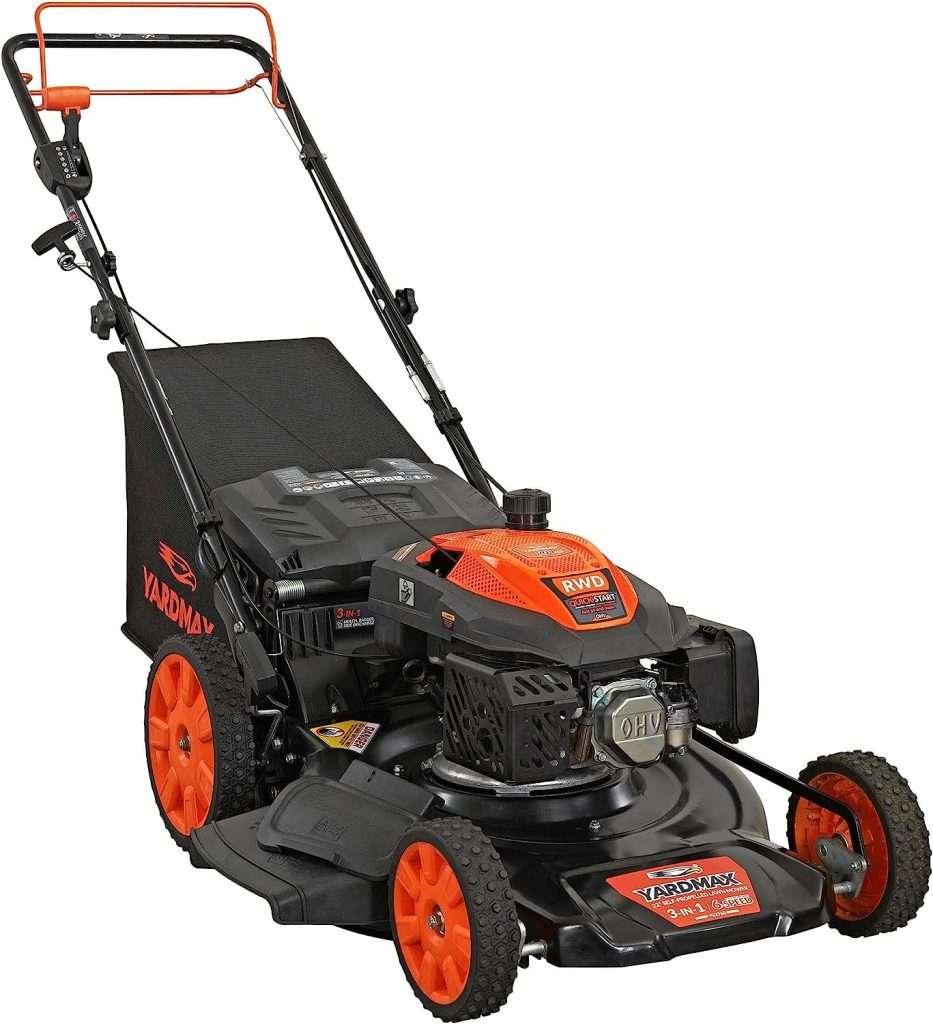
For a catalog-level lawn mower for yard type example, look at YARDMAX 22 in. 201cc Select PACE 6 Speed CVT High Wheel RWD 3-in-1 Gas Walk Behind Self Propelled Lawn Mower, Black. Confirm the relevant specification on the product page before using it to make a fit, runtime, compatibility or maintenance decision.
Slopes
Slope mowing raises traction and control questions that do not appear on level ground. Another useful cross-check is the lawn mower drive systems.
Use the mower manual for slope limits and operating direction; no drive type or wheel size should be used to override a manufacturer safety restriction.
Uneven Ground
Ruts, roots and rough transitions can make a low or rigid setup frustrating.
Wheel diameter, deck clearance, mower weight and pace control should be considered together because one large specification cannot compensate for every terrain issue.
For a catalog-level lawn mower for yard type example, look at Poulan Pro 163cc 675 Exi Side Discharge/Mulch/Bag 3-in-1 Front Wheel Self Propelled Mower 22" Deck. Use only the specifications that the product record confirms, and leave any missing detail unassumed.
Dense or Overgrown Areas
Tall or dense grass increases cutting load and often rewards a slower pace, higher first cut and more frequent mowing. For a closely related detail, use the mowing overgrown grass.
The goal is not to force a mower through material it cannot process; it is to choose a tool and mowing routine that keep load manageable. A related practical check is covered in the lawn mower cutting systems.
Terrain Checklist
Record mowable area, slope, surface roughness, gate width, typical grass density and storage access on one sheet.
That simple profile makes category and product comparison more disciplined because every candidate is judged against the same yard conditions.
Two lawns with the same square footage can require very different mowers. An open rectangle rewards steady passes, while the same area broken by trees, beds and narrow passages rewards turning ease and a compact footprint. Yard size is therefore a workload clue, not a complete specification. For the next detailed comparison, see the lawn mower sizing.
Slope and surface condition should be recorded before shopping. If the lawn includes a steep bank, soft ground or exposed roots, those constraints can eliminate a mower before battery voltage, engine displacement or clipping modes become relevant.
Within this lawn mower for yard type topic, the catalog provides Scotts 2000-20 20-Inch Classic Push Reel Lawn Mower. Treat the exact title and product record as the evidence; do not fill in features that the listing does not state.