
Lawn Mower Battery Voltage and Amp-Hours Explained focuses on the practical question behind mower voltage amp hours. It is written for cordless buyers confused by battery numbers who need to separate what can be verified from what still depends on the exact mower or manual.
Read voltage and amp-hours as two coordinates of the battery system, not as competing “power scores.”
What Voltage Means
Voltage is an electrical potential characteristic of the battery system and is commonly used in platform naming. A related practical check is covered in the cordless mower battery systems. A related practical check is covered in the lawn mower specifications guide.
It is useful for identifying the system but does not, by itself, state how long the mower will run. A related practical check is covered in the battery compatibility.
What Ah Means
Amp-hours describe charge capacity. A 4.0Ah pack and 2.0Ah pack can share a voltage while storing different amounts of charge.
Capacity comparisons are most meaningful within comparable battery systems and operating conditions.
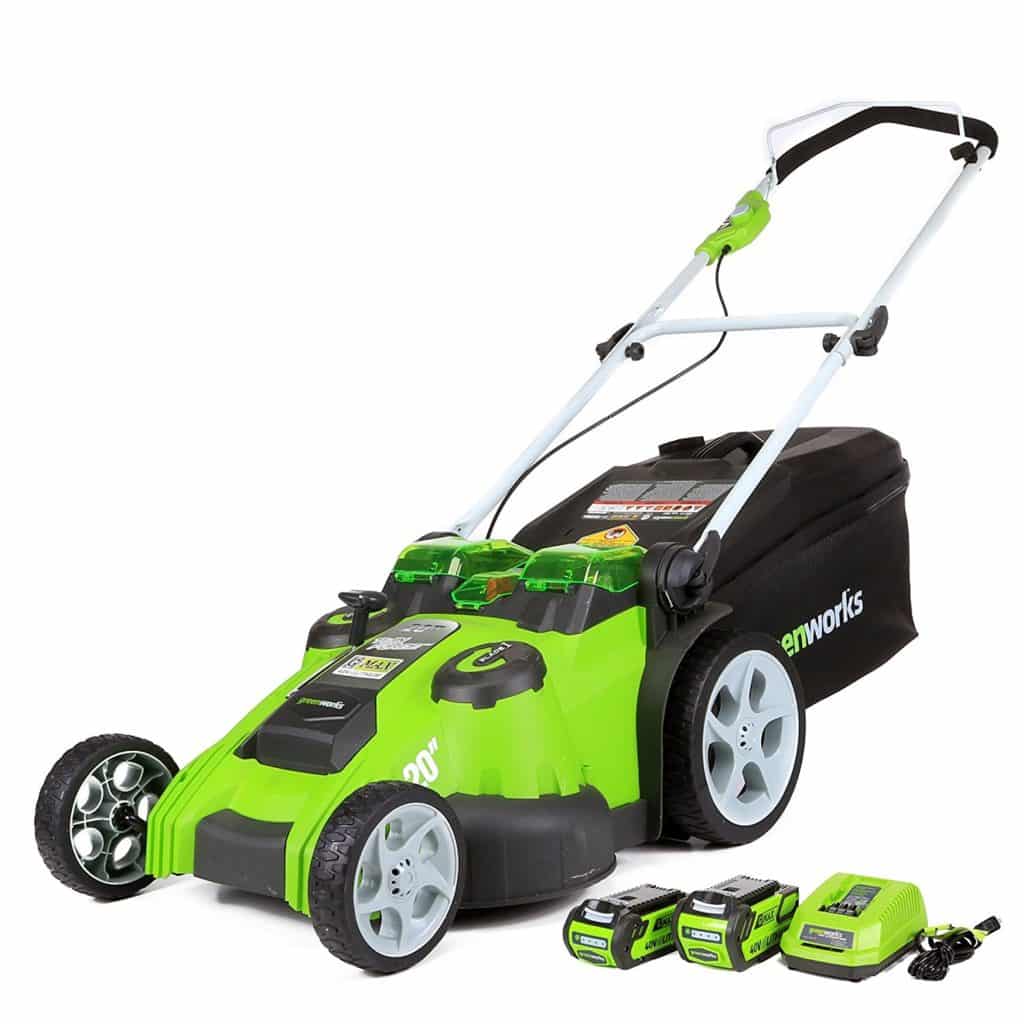
When checking mower voltage amp hours, one concrete catalog reference is Greenworks 20-Inch 40V Twin Force Cordless Lawn Mower, 4.0 AH & 2.0 AH Batteries Included 25302. Keep the comparison evidence-based: stated details count, while unstated details remain unknown. Buy Now on Amazon.
Energy Capacity
A rough electrical energy comparison can consider voltage and amp-hours together, but real mower runtime also depends on conversion losses and load. Another useful cross-check is the cordless mower runtime factors.
Use battery labels to understand capacity, not to promise an exact mowing area.
Why Higher Numbers Are Not Automatically Better
Higher voltage can come with a different platform, motor design, pack weight and product strategy. Higher Ah can add capacity and weight.
The best battery specification is the one that fits the mower, workload and charging plan.
For the mower voltage amp hours decision, compare the criteria above with Greenworks PRO 21-Inch 80V Cordless Lawn Mower, Two 2.0AH Batteries Included GLM801601. Treat the exact title and product record as the evidence; do not fill in features that the listing does not state.
A useful mental model is that voltage and amp-hours answer different questions. Voltage helps identify the electrical system, while amp-hours describe charge capacity. Comparing one number without the other can make two battery packs look more similar than they are. For a closely related detail, use the corded mower extension cord.
Even when electrical energy is estimated from both values, mowing conditions still matter. Dense grass, high drive use and battery temperature can change how much of that stored energy becomes useful mowing time.
