
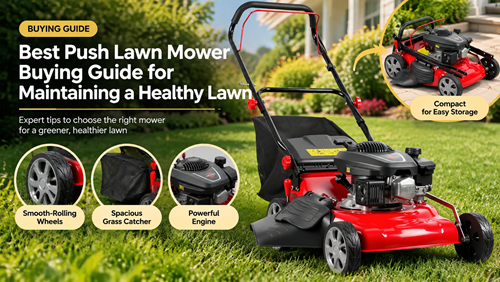
A push lawn mower buying guide is most useful when it starts with the lawn rather than the machine. Yard size, slope, gates, grass density, clipping preference, storage space, noise limits, and the person doing the mowing all influence whether a simple reel mower, gas push mower, corded electric model, or battery mower will feel practical after the first few cuts.
The healthiest result also depends on mowing habits. A sharp blade, suitable cutting height, dry-enough grass, clean airflow, and a mowing pace that lets the deck clear clippings can matter more than headline power numbers. Buying the right platform only creates the opportunity for a good cut; routine setup determines whether that opportunity is used.
This guide organizes the decision around measurable property needs so homeowners can compare machines without paying for weight, runtime, drive systems, or accessories they will not use.
How To Use A Push Lawn Mower Buying Guide
Measure the mowable area separately from the total lot. Patios, beds, trees, sheds, and driveways can make a modest property feel much smaller than the parcel size suggests. Also measure gates and side passages before comparing deck width.
List the hardest mowing condition: a steep section, thick fescue, wet low spot, leaf-heavy corner, or long stretch far from an outlet. A mower that handles the hardest recurring condition comfortably usually handles the easier sections without trouble.
Decide how you want to manage clippings. Mulching can return fine material to the lawn, bagging improves cleanup in specific conditions, and side discharge can move volume efficiently. The best system is the one you will actually use without overfilling bags or forcing an overloaded deck.
Push Lawn Mower Buying Guide Features That Matter Most
Match The Mower To The Property
A wide deck can reduce passes on an open lawn, while a compact deck can be faster around trees, gates, and narrow side yards.
Use a lawn size guide to connect cutting width with actual yard dimensions instead of choosing the largest deck by default.
Compare Power Sources
Gas offers refueling speed and familiar high-load performance, while electric platforms reduce fuel handling and often simplify routine maintenance.
A focused review of mower features helps separate useful controls from extras that do not change the mowing result.
Choose The Right Push Format
Manual drive keeps weight and complexity down, while self-propelled drive reduces pushing effort on slopes and larger lawns.
Browse the existing best push mower guidance before deciding whether drive assistance solves a real problem.
Understand Manual Cutting
A reel mower cuts with a scissor-like action and can be a strong fit for small, level lawns that are mowed frequently.
The site’s manual lawn mower section is useful when low noise and simple storage matter more than tall-grass capacity.
Evaluate Gas Ownership
Fuel storage, oil or engine service, air filters, spark plugs, and seasonal storage all belong in the purchase decision.
Compare a gas push mower only after confirming that its maintenance routine fits your household.
Evaluate Electric Ownership
Battery capacity, charger access, cord management where applicable, replacement packs, and temperature-aware storage define electric convenience.
An electric push mower can simplify regular mowing when the power system matches the yard and storage setup.
Think Beyond The Mower
Blades, bags, chargers, covers, and safety equipment all affect long-term usability and ownership cost.
The site’s grass cutting equipment collection gives buyers a broader view of compatible mower formats and related tools.
Mower Type Comparison For Common Home Lawns
Use the table as a first filter, then verify exact specifications for the model you are considering.
| Mower Type | Best Fit | Main Tradeoff |
|---|---|---|
| Manual reel | Small level lawns cut frequently | Struggles with tall or tough growth |
| Corded electric | Small lawns near reliable outlets | Cord management limits routing |
| Battery push | Small to medium lawns with planned runtime | Battery reserve and replacement cost |
| Gas push | Homeowners comfortable with engine care | Fuel, noise, emissions, and maintenance |
| Self-propelled | Slopes or larger mowing routes | Higher cost, weight, and complexity |
Do not treat the table as a ranking. The best choice depends on the property and the operator, not on which mower type has the longest feature list.
A Practical Pre-Purchase Yard Audit
Walk the exact route you normally mow and note gates, slopes, tree roots, tight turns, outlet locations, storage access, and where clippings are typically handled.
- Measure total mowable area
- Measure the narrowest gate
- Identify the steepest slope
- Note the dominant grass type
- Decide whether you mulch, bag, or discharge
- Measure storage width and height
- List acceptable maintenance tasks
- Set a realistic total budget
Bring those measurements to product comparisons. A mower that fits the route, storage, and maintenance plan will usually create a better ownership experience than a machine chosen from power claims alone.
Buying Mistakes That Cost Time Or Cut Quality
- Buying a wide deck before measuring gates
- Assuming more power fixes a dull blade
- Ignoring mower weight during turns
- Planning battery runtime with no reserve
- Choosing gas without a fuel-storage plan
- Buying accessories before confirming compatibility
A practical buying process removes uncertainty one constraint at a time. Measure first, then compare only the features that change the result on your lawn.
Safety, Setup, And Long-Term Ownership
Read the exact owner’s manual before the first mow, keep children and bystanders away from the mowing area, and inspect for stones, wire, toys, and other debris that the blade could throw.
Keep blades sharp and properly installed, clean the deck only after the power source is disabled as directed, and use manufacturer-approved parts. Battery packs and gasoline both need storage practices that match their manuals.
For general walk-behind mower safety, review the U.S. Consumer Product Safety Commission power mower guidance and then follow the instructions for the exact model you own.
Choose The Mower That Makes Good Lawn Care Easier
A push lawn mower buying guide should narrow the decision to a machine that fits the property, the operator, and the maintenance routine. Yard size, access, cutting width, power source, clipping method, storage, and serviceability are the core filters.
Once the mower fits those constraints, lawn health depends on mowing height, blade condition, timing, and how much grass is removed in a single pass. A well-matched mower makes those good habits easier to repeat.
Frequently Asked Questions
What size push mower is best for a small yard?
Choose a deck that passes through the narrowest access point and still covers the open lawn efficiently. Many small yards benefit more from maneuverability than maximum width.
Is gas or battery better for a push mower?
Gas can suit longer or heavier cutting sessions, while battery platforms reduce fuel handling and often simplify routine maintenance. Compare the actual yard and runtime needs.
Do I need a self-propelled mower?
It can be valuable on slopes, long routes, or when mower weight causes fatigue. A flat compact lawn may not justify the extra cost and complexity.
How much battery runtime should I plan for?
Use real mowing time plus reserve for thicker grass, bagging, slopes, battery aging, and temperature. Published runtime should not be treated as a guarantee.
How often should a mower blade be sharpened?
Inspect it regularly and follow the manufacturer’s service guidance. Nicks, rounded edges, vibration, and torn grass tips are signs that blade attention may be needed.