
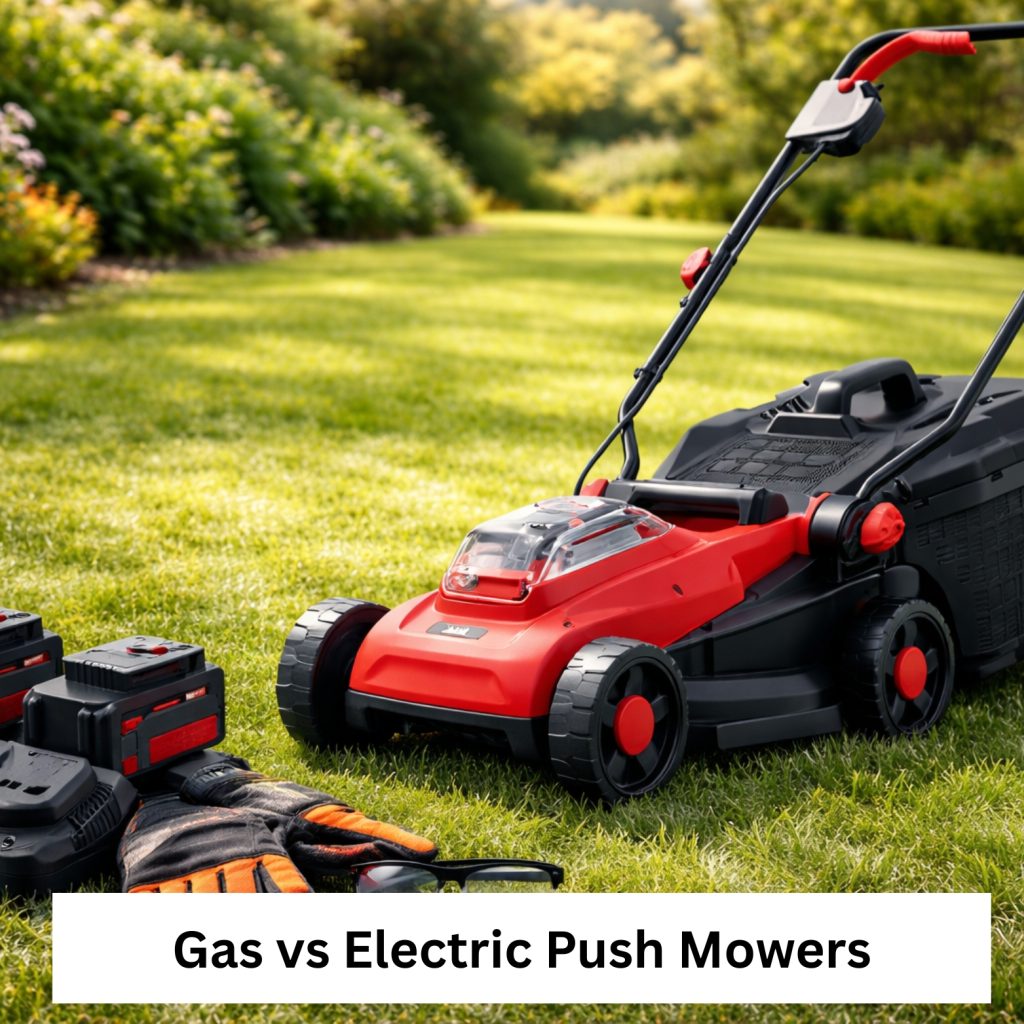
Initiating a healthy lawn begins with the proper equipment and applications. Homeowners are most interested in windshield wipers for recommended gas vs electric push mowers. Depending on the yard sizes and the maintenance level you are after, either option has its distinct advantages. Understanding these disparities avoid disillusionment and enables consistency.
For many, gas-powered mowers are a familiar tool that is powerful and has a long run time. Gas push mower was loud and needed more upkeep compared to electric ones. Each item is made for a particular purpose. Ultimately, the mower’s designs and functionality suit specific yard conditions and frequency of use.
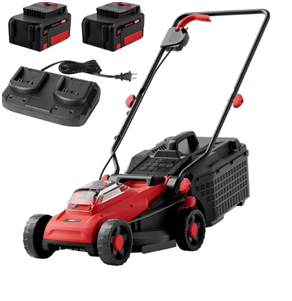
An overview of this gas vs electric push mower guide will compare the performance, cost, maintenance, and ease of use. The right mower will keep your lawn neat and easy to manage throughout the growing season with the right advice and a clear view.
Gas and Electric Push Mowers – Understanding Them
Push mowers are built with a cutting system not a driving system. Gas and electric models work and perform very differently as a result you need different upkeep. Understanding the difference helps narrow down your choice.
What is gas push lawn mowers? They provide great torque and consistent cutting. Electric push mowers can be a battery-powered or corded-powered system. They give preference to quiet operation and easy handling.
| Feature | Gas Push Mower | Electric Push Mower |
| Power Source | Gasoline Engine | Battery or Corded Electric |
| Runtime | Limited by Fuel Tank | Limited by Battery/Outlet |
| Maintenance Level | Moderate-High | Low |
| Noise Level | Loud | Quiet |
| Environmental Impact | Emissions Present | Low or Zero Emissions |
| Cutting Power | High | Moderate-High |
Gas mowers perform better in bigger yards with thick grass. Electric units are suitable for small lawns and cities.
When discussing gas versus electric push mowers, consideration should be given to how often you mow. A weekly servicing may favor electric convenience. Gas-powered generators are advantageous for bigger properties.
Terrain Understanding Also Matters. Uneven or sloped yards may need stronger torque. Electric models typically have lower weight aiding in handling.
Which option delivers better results, performance or efficiency?
The performance of a mower is a chief criterion in selecting a mower. The overall satisfaction is influenced by cutting power, runtime as well as consistency. Evaluating these areas clarifies the recommended gas and electric push mowers for various lawn sizes.
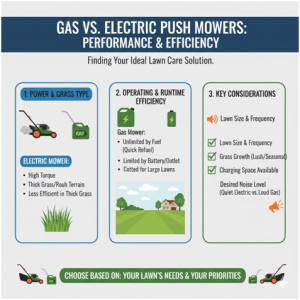
Cutting Power and Grass Type
Gas push mowers deliver powerful torque. They manage thick grass and rough ground well. When gas engines are well-maintained, thick patches do not block them often.
Gas models may seem more reliable for homeowners with heavy growth. Electric variations are for regular trimming and lighter conditions.
Operating and Execution Efficiency
A gas mower will run until you run out of fuel. It only takes minutes to refuel. Larger lawns benefit from this feature.
Battery-powered electric mowers cannot run indefinitely per charge. The runtime depends on battery capacity. Models that are corded rely on access to an outlet.
Take into account these performance factors
- Size of lawn and mowing frequency
- Lush and seasonal growth of grass
- Charging space is available
- Noise level you want
Electric cars are quieter, so aren’t disruptive to neighbors. While gas mowers make more noise, they have no power impairment.
Check the engine size and battery voltage on buy push lawn mower while browsing options. Capacity expected according to specification.
Differences between the cost, maintenance, and long-term value of timber and brick
The cost and maintenance are important in mower ownership. There is a vast difference between gas and electric models when it comes to maintenance requirements.
Gas-powered mower needs the oil change, spark plug replacement, and fuel management. Over the time, maintenance costs pile up. Using electric mowers saves money on fuel and mechanical repairs.
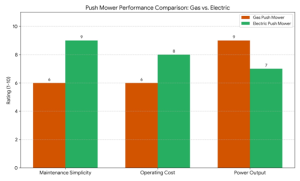
- Electric Mowers Excel in Simplicity: Electric Models Score atleast 9/10 with Not-Complicated at all. In other words, you don’t have to oil-change, spark-plug and tune-your-engine at all with these.
- Gas Dominates Raw Power: Raw Power Dominates When mowing thick, overgrown or wet grass, Gas is the heavy boss you want into your gardening shed. In fact, with a 9/10 power output, Gas mowers have more torque than 7/10 battery mowers.
- Lower Long-Term Operating Costs: Electric mowers score 8/10 for Cost Efficiency, as the price of charging a battery is much lower than the recurring cost of petrol and engine oil. Thus, they possess lower long-term operating costs.
- The Power-to-Maintenance Trade-off: The graph shows the kind of trade-off in terms of power-to-maintenance. A gas mower will require difficult maintenance repairs but will be able to deliver powerful performance. An electric mower on the other hand will be easy to maintain but will not have the high-end torque of gas mowers.
Electric mowers rank first in maintenance ease and operating cost. Gas models are mostly used for raw cutting ability.
When comparing suggested gas push mowers to electric push mowers, consider the initial cost against future maintenance. Electric mowers may have higher battery costing in the beginning, but are less maintenance demanding.
It is also durable. Gas-powered engines could be more durable with maintenance. The life of a battery depends on how often we charge it and how frequently we use it.
A guide to selecting a suitable push mower for your lawn.
How to choose the best mower for your lawn? Start off by measuring the size of your yard. Electric models tend to fit smaller lawns under a quarter acre.
Take these helpful steps.
- Total mowing area measure
- examine the thickness of the grass
- Check the available storage
- Compare your maintenance expectations
Compact electric designs can be more appealing for those homeowners with limited storage space. People with large properties may need gas power.
Do not overlook physical comfort. Electric mowers tend to be lightweight and maneuverable. Gas engine models may seem heavier but output power consistently.
Climate factors also contribute. Gas engines do not perform well in cold weather. Battery performance can degrade in extreme temperatures.
While assessing buy push lawn mower, consider deck width and height options. The features affect the mowing efficiency and appearance of the lawn.
Evaluate handle comfort and starting ease. Electric push mowers usually start up with a button. The ignition method of gas mowers is pull start.
The balance between power and ease makes for a great purchase.
Remarks on Suggested Gas or Electric Push Mowers
Choosing between the recommended gas vs electric push mowers depends on the size of your lawn, amount of maintenance you want to do, and how much noise you’re willing to endure. Gas models deliver excellent cutting performance and long runtimes. Electric mowers are quieter and easier to maintain
By understanding terrain and grass conditions, selection will be smart. Smaller lawns can benefit from electric. Gas power may be needed for larger yards.
If we evaluate maintenance demands and operating costs carefully then we will not suffer unexpected expenses. Check Specs at Buy Push Lawn Mower and choose wisely
Gas and electric push mowers each serve different homeowner needs. The analysis of yard size, power needs and long term value, you can choose a mower you can trust to maintain your lawn throughout the season.
