
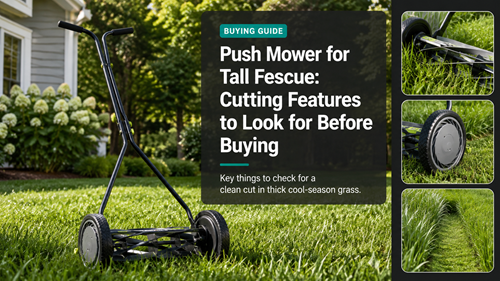
Push Mower For Tall Fescue is easiest to choose when the mower is matched to the property instead of being judged by power or deck size alone. Tall fescue produces coarse, dense leaves that can load a mower heavily when growth is lush or damp. Cutting too low exposes crowns, reduces shade on the soil, and can leave the lawn looking pale or ragged even when the mower itself is powerful.
This guide is written for homeowners growing dense tall fescue lawns. A push mower for tall fescue needs usable height adjustment more than a flashy maximum-power claim. Deck airflow, blade condition, bagging or mulching capacity, and the ability to maintain forward pace without bogging all affect the finished surface.
For a push mower for tall fescue, start by measuring and observing the yard before comparing models. Plan around grass condition rather than a fixed weekly habit. During fast spring or fall growth, mowing a little more often can be easier on both the turf and the machine than waiting until the mower must process a heavy layer of long leaves.
How To Choose A Push Mower For Tall Fescue
For tall fescue, prioritize a mower that holds a relatively high cutting setting, maintains blade speed in dense cool-season growth, moves clippings cleanly, and has a sharp blade. Avoid removing too much height in one pass; recovery and cut quality are usually better when the lawn is brought down gradually.
The right choice should make the normal weekly route easier, not merely win a specification comparison. Think about turning, transport, clipping handling, blade access, and the conditions that occur when the grass is growing fastest.
A useful buying test is to imagine the first ten minutes of mowing and the last ten minutes of cleanup. If the machine fits both parts of that routine, it is much more likely to remain a practical long-term purchase.
Cutting Height, Airflow, And Dense-Turf Performance
Mower For Dense Fescue Grass
Dense fescue rewards consistent blade speed and a sensible walking pace. If the engine or motor labors, slow down, raise the deck, or make a second pass rather than forcing a low cut.
For a practical comparison, review mower for dense fescue grass and compare the dimensions or operating limits with your own yard.
Fescue Cutting Height
Height adjustment should be easy enough that you will actually use it. A broad usable range matters when the lawn is recovering from heat, entering a growth flush, or being reduced gradually after missed mowing.
When you narrow the shortlist, compare fescue cutting height against the route, grass condition, and storage limits you measured.
Mower Blade For Thick Turf
A sharp blade slices the coarse leaf instead of tearing it. Inspect the tip after mowing; shredded or frayed ends are a strong reason to sharpen or replace the blade.
A useful specification check is mower blade for thick turf while confirming that the exact model still matches the manufacturer instructions.
High Lift Mower Performance
High-lift and airflow-oriented setups can improve bag filling on dense turf, but they can also increase power demand. Use the blade and deck configuration approved for the mower.
For this part of the decision, use high lift mower performance as a reference point rather than assuming one feature guarantees overall performance.
Cool Season Turf Mower
Cool-season turf often grows fastest when temperatures are moderate. Battery runtime or fuel capacity should cover the yard without forcing you to rush through thick sections.
Before ordering, cross-check cool season turf mower and focus on the specific characteristic discussed here, not the marketing headline alone.
Fescue Lawn Equipment
Good fescue equipment includes more than the mower: blade service tools, clean bagging components, and a height system that stays even from side to side all protect cut quality.
To connect the feature with a real mower or guide, review fescue lawn equipment before deciding whether that feature is worth paying for on your property.
Quick Comparison Table
Use this table to turn the topic into a shortlist. The “best” column is not a universal specification; it describes the direction that generally fits the condition in the first column.
| Situation | What to Prioritize | What to Watch |
|---|---|---|
| Cutting height | Broad higher range | Avoid a mower locked to very low settings |
| Blade | Sharp and correct for deck | Replace damaged or badly worn blade |
| Pace | Slow enough to maintain blade speed | Do not force dense wet growth |
| Discharge | Mulch or bag only when deck can process load | Switch modes if clumps form |
| Timing | Mow before excessive height develops | Avoid removing a large fraction at once |
A Practical Buying and Mowing Checklist
Use the checklist before purchase and again before the first mowing session. It keeps the decision grounded in yard measurements, safe operation, and maintenance rather than a single headline feature.
- Check current grass height
- Set deck conservatively high
- Inspect blade sharpness
- Mow only when turf is reasonably dry
- Listen for blade-speed drop
- Slow down in dense patches
- Recheck cut tips after one strip
- Clean deck after heavy growth
A closely related planning step is covered in warm-season low-cut mower setup, which can help you compare another part of the same mowing workflow without repeating this article’s focus.
Mistakes That Cost Time or Cut Quality
- Scalping fescue to reduce mowing frequency
- Mowing wet dense turf at full pace
- Ignoring a dull blade because the mower still cuts
- Lowering multiple height positions unevenly
Most of these mistakes come from optimizing one mower specification while ignoring the property. Measure first, use the manual’s operating limits, and make small adjustments after observing the first few mowing sessions.
Safety, Maintenance, and Ownership
Routine ownership still matters after the purchase. Keep the blade sharp, clean the deck with the power source disabled, inspect wheels and fasteners, and follow the manual for battery, cord, fuel, oil, and seasonal storage requirements.
Before every mow, inspect the area for stones, wire, toys, sticks, holes, people, and pets. Wear appropriate footwear and eye protection, keep guards in place, and never clear a chute or touch the blade area until the mower is fully disabled according to its manual.
For an authoritative safety or turf reference, review University of Georgia tall fescue guidance and apply it together with the instructions supplied for the exact mower model.
Final Buying Direction
A push mower for tall fescue should solve the property-specific problem described in this guide without creating new issues with access, cut quality, maintenance, or storage. The most useful specifications are the ones you can connect directly to a measurement or mowing condition in your own yard.
Shortlist two or three models, compare the complete mower footprint and approved operating features, verify blade and replacement-part support, and choose the machine that makes a safe repeatable weekly routine simplest.
Frequently Asked Questions
What cutting height is suitable for tall fescue?
Recommendations vary by region and cultivar, but tall fescue is commonly maintained relatively high. Use local extension guidance for your climate and avoid removing more than a modest portion at one mowing.
Does tall fescue require a gas mower?
No. A capable cordless or corded mower can work well when deck size, blade speed, battery or power supply, and mowing frequency match the lawn.
Why does my mower leave clumps in fescue?
The grass may be too wet, too tall, or moving through the deck faster than it can be processed. Raise the deck, slow down, or mow more frequently.
Should I mulch tall fescue clippings?
Fine clippings can usually be returned when the mower can process them cleanly. Bagging may be useful when growth is excessive or clumps would remain.
How can I tell if the blade is dull?
Look at the cut leaf tips. Ragged, shredded, or whitish ends often indicate a blade that needs sharpening or replacement.
